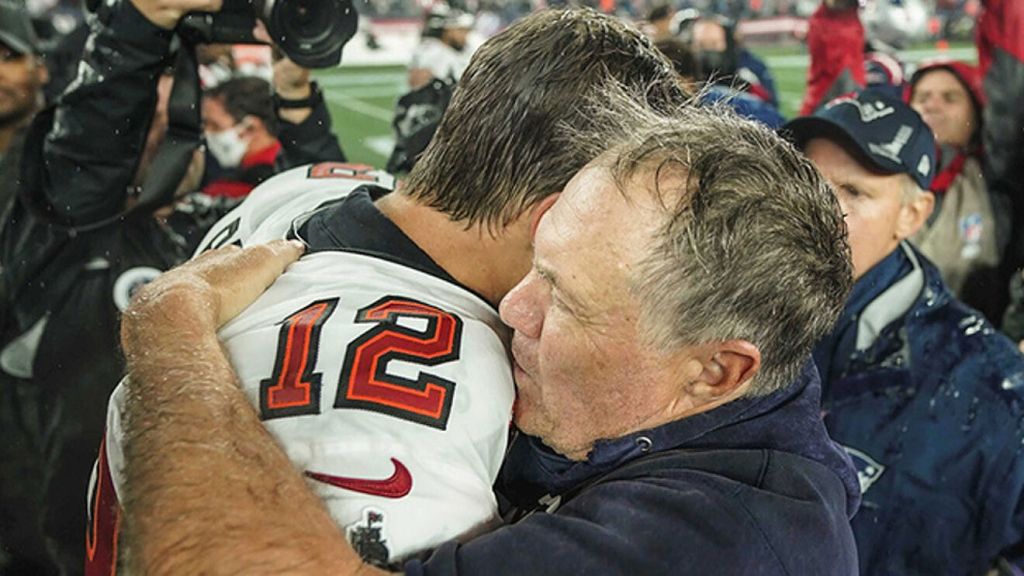
On February 1, 2023, Tom Brady posted a video to his Instagram announcing his retirement from the NFL. Unlike his retirement almost a year ago to the exact day, Brady made it abundantly clear that this time it was for good.
“Good morning guys, I’ll get to the point. I’m retiring,” Brady said. Then after a short pause he said with conviction “for good.” He went on to thank his family, teammates, friends, coaches, and everything who was involved in his career.
So, unless he pulls a Brett Favre, and unretires again, it’s the end of a 23-year era that changed football in many ways that many fans – especially those up in New England – didn’t think was possible.
Going into the 2000 NFL Draft, the New England Patriots had their quarterback in Drew Bledsoe, and he was truly coming into his own, but in the 6th round, the Patriots selected Brady, a kid from the University of Michigan who ran a 5.28 40-yard dash, and a 24.5 inch vertical. Not to mention, he only weighed in at 211 LBS, and wasn’t mobile to say the least.
For reference, future teammate, and defensive tackle Vince Wilfork ran a 5.21 40-yard dash.
These were all numbers, and measurables that scouts had him projected as a backup at best – in fact, many didn’t even have him on their boards and wrote him off as someone who wouldn’t ever make that far. Clearly, New England head coach Bill Belichick saw something different. Seven Super Bowl rings, 27 postseason wins, and numerous other records later – Belichick was proven right, and now Brady gets to ride off into the sunset.
The surface value of this story is just that, well, Brady is retiring for good. Again, that’s just the surface. What it really tells, is that the end of an era is here – whether it’s for good or for bad.
Going into the latter part of the 2022-23 NFL season, one thing was becoming apparent. The quarterback type that most coaches – excluding Belichick for the most part – were looking for had been evolving from a guy who can throw the ball well, to one who can move around and throw the ball on the move.
Will The Pocket Passer Be Extinct Now?
With Brady’s retirement, that brings about the question now of how much is space in the NFL is there really for guys like him who have a tendency to stay in the pocket. This includes quarterbacks like Aaron Rodgers, Matthew Stafford, Jimmy Garoppolo, Matt Ryan, and Derek Carr to a certain extent.
You could argue that they are more mobile than Brady was, and I’ll agree, but that doesn’t really say much consider how little Brady used his legs in his career. Plus, are any of the above mentioned quarterbacks really what coaches are looking for these days as an “ideal” signal caller?
If you think about it, none of them can extend a play by running the ball like, say, a Kyler Murray, Lamar Jackson, Josh Allen or even Joe Burrow and, outside of Stafford and Ryan, not one of them was drafted in the first round – let alone be considered first-round talent like Murray, Jackson, or Burrow would be.
With Brady’s retirement, an era of quarterback-type comes at least closer to metaphorically closing up shop. Whether that’s for better or for worse, it’s up to you to decide, but the era of the pocket passer has definitely come to a metaphorical end.
Moving forward with the era of the pocket passer coming at least closer to the end, what does this mean other than phasing out quarterbacks like Rodgers, Stafford, Garoppolo, Ryan, and Carr?
The first thing, it will not only shine a brighter light on quarterbacks like Allen and Burrow, who are a good hybrid between Brady, and the new age of quarterbacks, but it also shows how valuable a quarterback like Kansas City Chiefs signal caller Patrick Mahomes can be, and really how invaluable – and nearly irrelevant – a guy like Mac Jones, aka Tom Brady 2.0, can become.
Mahomes, not only can run, but he can run while on the move; whereas, Jones is lucky if he can get a pass off when he’s mere inches out of the pocket, let alone on the run. Plus if Jones were to run the ball, he looks as awkward as Brady did at the combine. That is if he’s going forward in the first place (haha).
The Patriot Way: Will It Still Exist/Be Relevant?
Brady’s retirement also leaves up for debate whether or not Belichick’s way of coaching up for debate is the good way to coach NFL players. Belichick has had a long history of hard coaching, strict discipline, and accountability – also known as “The Patriot Way” – of which Brady was the embodiment of.
Given the eminent retirements of Matthew Slater and Devin McCourty, the only player left it seems that wants to be coached that way is the aforementioned Jones. Sure, around the league the coaches are no slouch (otherwise they would be coaching Pop Warner), but there isn’t a coach like Belichick who will fine you, or even cut you, if you are late to practice. In other words, old school coaching.
The way society is in regards to coaching these days, this close to the end of his career Belichick can only hope that his way of coaching doesn’t go extinct, much like Brady’s way of operating at quarterback, before he breaks Don Shula’s record – Belichick’s unspoken goal before retirement.
Brady made it to his goal of playing until he was 45, congratulations to him on his retirement. Belichick is still 30 wins away from Shula – manageable or not? That remains to be seen.
 The Northeast Regional Sports Journal
Leave a comment